Adventure Parks & Urban Fitness in Tallinn: A Guide to Active Travel
Adventure Parks & Urban Fitness in Tallinn
Tallinn is easy to underestimate if you only see it through the Old Town. The city is compact, but it is not one-note. In a single day you can move from cobbled streets in Tallinn Old Town to a park loop in Kadriorg, then out toward the sea in Pirita or into the forest edge around Nõmme. That range is exactly why adventure parks in Tallinn and the city’s quieter outdoor spaces work so well for active travel. You do not need to treat movement as a separate activity here. It can sit inside the day naturally, between coffee, museums, a tram or train ride, or even a late beer.
For travelers who like outdoor activities in Tallinn, the useful question is not just where to go, but what kind of movement you want. Some places are built for obstacle courses and a more deliberate outing. Others are better for jogging, Nordic walking, or an hour of steady walking with a sea view. Tallinn rewards that kind of planning. Choose the area that matches your energy level, and the city does the rest.
Why Tallinn Works So Well for Active City Breaks
Tallinn is one of those cities where active sightseeing makes sense because distances stay manageable. You can walk a surprising amount without turning the day into a transit project, and when you do need transport, trams, buses, and short taxi rides make it easy to connect different neighborhoods. That matters in a city where the mood changes quickly: central streets around Kesklinn feel different from the coastal air in Pirita, and both feel different again from the forested edges of Nõmme. The point is not to cover everything. It is to move through the right parts of the city efficiently.
There is also a terrain reality people miss. Tallinn is not flat everywhere. Some routes are almost effortless, especially around waterfront promenades and park paths, while others climb enough to make you notice your pace. That is useful information if you are planning a run or a long walk. Coastal routes tend to feel open and exposed. Central parks are calmer and more compact. Forested areas feel more like training ground than sightseeing. Each serves a different version of the city.
What Kind of Traveler Gets the Most Out of Tallinn’s Active Side
This guide fits travelers who like to do something with their mornings. A weekend visitor might want one active outing and one slow evening, not a packed itinerary. A digital nomad might want a scenic run before café time in Kalamaja or Telliskivi. A craft beer traveler may prefer a walk that ends near a taproom rather than another museum. Tallinn suits all of that because the city is comfortable with everyday movement. It is not a place where you need to chase drama to feel like you used the day well.
Half a day is enough for one trail, one promenade, or one park-based workout if you keep the route focused. The smartest active days here are clustered by neighborhood. Start somewhere central, move in one direction, and leave room for a recovery stop. That is how Tallinn feels easiest.
How Tallinn’s Seasons Change the Experience
Summer is the obvious season for outdoor movement. The daylight is long, the evenings are usable well past dinner, and coastal routes can feel almost suspended in time when the light stays late over the Baltic. If you are looking at summer activities in Tallinn, this is when the city gives you the widest range. You can walk, run, cycle, or just spend a long afternoon outside without watching the clock.
Shoulder season is more mixed. Wind matters. Rain can arrive quickly. On the coast, a route that sounds easy on paper can feel much colder than it does inland. Winter and early spring are more demanding still. Ice, snow, and shorter daylight change what is practical. Some places remain useful if the paths are cleared, but the mood shifts from open-air wandering to more purposeful exercise. That is normal here. A good Tallinn plan adapts instead of pretending the season does not exist. For broader timing ideas, it helps to also check Tallinn summer travel tips.
Choosing Between Adventure Parks, Trails and Everyday Workout Spots
If you came looking for adventure parks in Tallinn, it helps to separate the city’s active options into three practical types. First are the obstacle-style parks and rope courses, which are more of a destination outing. Then there are the health trails and forest loops, which suit running, walking, and structured outdoor exercise. Finally, there are the everyday urban spots: promenades, park circuits, and seaside paths that locals use without treating them like attractions. Each has a different purpose.
That distinction matters because a family adventure park Tallinn search often produces results that are fine for children but less useful for adults who want a proper workout or a more scenic walk. If your goal is movement first and sightseeing second, everyday fitness spaces are often the better fit. They are easier to slot into a city break, less time-intensive, and usually more predictable in terms of access.
Adventure Parks for a More Activity-Heavy Outing
Adventure park-style experiences around Tallinn usually mean tree-top courses, rope elements, obstacle routes, and outdoor challenge setups. These are better treated as a planned outing than a quick stop. You will likely want to set aside a morning or afternoon, especially if you are going with a group and nobody is in a rush. For adults, the appeal is often less about novelty and more about getting a physical, slightly different kind of outdoor session without leaving the city region entirely. That kind of adventure park you can find in Nõmme and Pirita.
Weather and opening season matter more here than in a park loop or promenade. A windy or wet day can change whether the outing feels worthwhile. If you are comparing adventure activities Estonia style experiences, the best ones are usually those that fit your group’s energy level rather than the ones that sound the most dramatic online. In practice, that often means choosing something accessible by tram, bus, or a short taxi ride and accepting that the session is the destination.
Urban Fitness Spots That Locals Actually Use
Tallinn’s most usable fitness spots in Tallinn are often the places that do not advertise themselves as fitness spots at all. Promenades work for steady walking or jogging. Park loops are good for easy runs and bodyweight work, outdoor gyms in local parks and forests are perfect. Health trails offer a more structured feel, with surfaces and routes that support repeated use. You see this especially in places like Nõmme, Harku, Pirita Forest, and the coastal paths where people go out for Nordic walking or a quick training session before work.
These places are popular because they are practical. They fit around life. They are easy to return to. They are not about checklist travel. That makes them especially useful for visitors who want to understand Tallinn nature and recreation in the way locals actually experience it: as regular, repeatable space rather than a special occasion.
Kadriorg to Pirita: The East-Side Route for Scenic Movement
One of the best ways to understand active Tallinn is to move east from the center. Kadriorg Park, the Russalka Memorial, the stretch around the Tallinn Song Festival Grounds, and the Pirita Promenaad all connect well in a single outing if you want a longer walk or run. This side of the city works because it gives you variety without making you overthink transport. You can start in a green central park, head toward the seafront, and keep going as far as your legs and the weather allow.
The atmosphere changes as you move. Kadriorg feels shaded and composed. The coastal section opens out. Wind becomes a factor. Light gets stronger. The route starts to feel less like an urban park and more like a proper seafront stretch. That shift is one reason locals and repeat visitors return to it.
Kadriorg Park as the Easiest Place to Start
Kadriorg Park is one of the easiest active areas to reach from central Tallinn, which is why it is useful for almost any kind of day. If you are staying near Freedom Square or the Old Town, it is close enough to fit into a morning without much planning. It works for an easy run, a recovery walk, or a gentle loop before museums. Hirvepark and Toompark It also works well if you want a scenic break without committing to a long route.
This is where movement and culture overlap nicely. A walk through the park can sit before or after a visit to Kumu Art Museum or the historic parts of the neighborhood. If you want a deeper look at the area itself, the Kadriorg travel guide is useful for planning a slower day. The park is not just pretty. It is one of the most repeatable outdoor spaces in the city.
Pirita Promenaad for Longer Walks, Runs and Sea Air
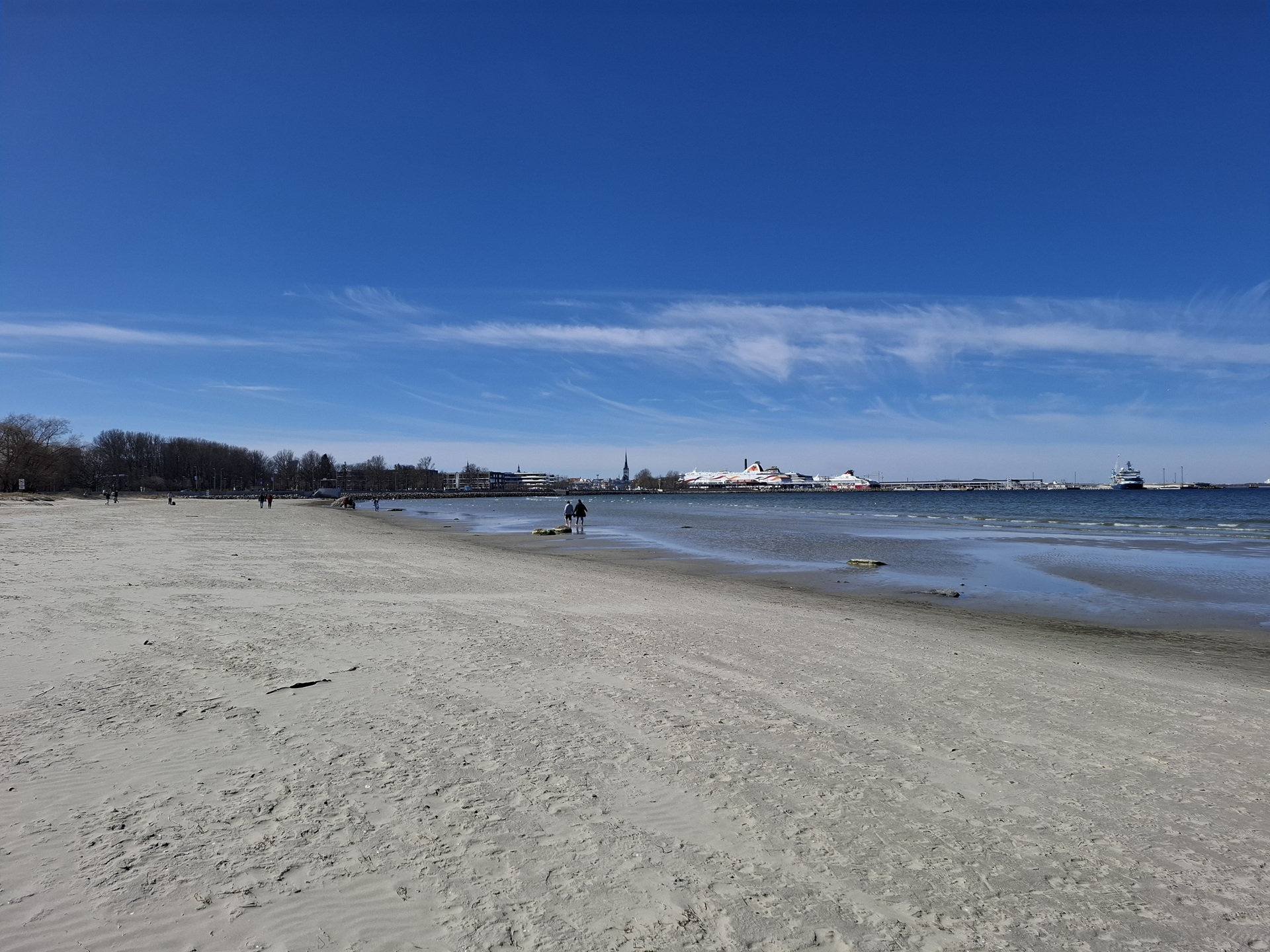
Pirita Promenaad is better when you want space. The route has a different feel from central Tallinn because the sea is always in the picture, even when the weather is not especially kind. On a clear summer evening, the light can stay soft for hours. On a windy day, the same stretch can feel sharper and more exposed. That is part of its character. It is not a sheltered city stroll.
If you are planning a longer run, give yourself enough time to move beyond a quick out-and-back. The route rewards that. You can connect the promenade with landmarks like Maarjamäe Memorial, the Russalka Memorial, or the edge of the Tallinn Song Festival Grounds.
Nõmme, Pirita and Harku: Tallinn’s Most Practical Trail Country
If you want a more exercise-first version of the city, Nõmme, Pirita and Harku Forest are where Tallinn becomes most useful. These are the places people go for regular movement: running, walking, trail time, and low-key training. They feel more residential and recreation-focused than central Tallinn, which is exactly why they work. You are less likely to treat them as sightseeing destinations and more likely to use them properly.
Nõmme Health Trails for Repeatable Training
Nõmme Health Trails are one of Tallinn’s most straightforward answers to where locals go for outdoor exercise in Tallinn. They are useful for a steady weekday run, a Nordic walking session, or a morning when you want to get some proper distance into the legs before the rest of the city wakes up. There is a reason people return to them. They do the job without drama.
Transport is part of the decision here. You can easily get to Nõmme from the city center by bus or train. This is not the place to wander toward accidentally. Plan the trip, go there with intention, and allow enough time to make the round trip worthwhile. If you like the idea of a structured outdoor workout, this area makes a strong case for itself. If you want a postcard walk, there are better options elsewhere. That is not a flaw. It is the point.
Harku Forest for a More Natural, Longer-Session Feel
Harku Forest suits walkers and runners who want a longer session with more tree cover and less city noise. It feels especially good on a day when the Old Town is busy and you want to shift into a calmer rhythm. This is a good place for a reset day during a packed weekend. It is also where the idea of Tallinn parks and trails becomes less decorative and more functional.
Leave extra time for access and return travel. That is part of the trade-off. You are getting quieter terrain and a more sustained outdoor feel, but you are also stepping away from the central tourist flow. For visitors who value repetition over landmark density, that is a strong exchange.
Pirita: The Ultimate Fusion of Nature and Movement
Pirita is the ultimate intersection of nature and movement in Tallinn. Its expansive forest trails offer a secluded escape for runners and cyclists, providing a soft-ground alternative to the urban sprawl. These paths wind along the Pirita River, where the tranquil water creates a serene environment for rowing and outdoor strength training.
The landscape opens up at the sea, where a wide promenade invites skaters and joggers to exercise against the backdrop of the Baltic Sea. By weaving together woodland tracks and coastal paths, Pirita transforms a simple workout into a refreshing journey through Estonia’s most diverse natural landscapes.
Kalamaja, Telliskivi and Põhja-Tallinn: Active Time Between Cafés and Coastline
On Tallinn’s north side, the day tends to move differently. Kalamaja, Telliskivi, Kalaranna, and the wider Põhja-Tallinn area are easy to use for a walk-run-café pattern. You can start with a street-level stroll, cut across to the coast, and end somewhere with coffee, food, or beer without losing momentum. That makes this part of the city ideal for travelers who want things to do in Tallinn besides bars and museums, but still want a social finish to the day.
The atmosphere here is a mix of residential calm, creative-city energy, and patchy coastal space. It feels lived in, not staged. That matters. You are not chasing a single attraction so much as using the neighborhood as a base. If you want a broader orientation to the area, the Telliskivi neighborhood guide helps make sense of the streets and the rhythm.
Kalamaja and Telliskivi as a Walkable Active Base
Kalamaja and Telliskivi Creative City are especially useful if you want movement without leaving the city mood behind. A neighborhood walk can turn into a café stop almost by default. An easy run before brunch is realistic. A late afternoon stroll can stretch toward the waterfront. This is one of the best parts of Tallinn for urban fitness Tallinn because it never asks you to choose between activity and atmosphere.
Short transfers make it easy to combine with other north-side stops like the Seaplane Harbour or Stroomi Beach. If your idea of active travel includes a slow city pace, this cluster works well. It is not about effort alone. It is about flow.
Pairing Activity with Food, Beer and a Low-Key Evening
After activity, Tallinn makes recovery easy. A walk can end near a taproom. A training session can lead into a relaxed meal. A coastal route can finish back in Telliskivi with enough energy left to sit down properly. That is where the city’s beer culture fits naturally. It is not something you bolt on. It is often just the most convenient next step.
If you want to stay within a sensible radius, a stop at some taproom or brewery, this will fit well after a north-side outing. The broader Tallinn craft beer guide can help if you want to keep the evening moving. And if you are looking for a calmer finish, the best bars in Tallinn gives you options that make sense after a long walk rather than before it. The key is not to force the pairing. Let the route decide the stop.
How to Plan a Half-Day or Full-Day Active Route Without Wasting Time
Tallinn works best when you plan by neighborhood, not by trying to cross the whole city in one loop. A half-day is enough for a strong active outing if you keep the route clean. A full day gives you room to combine movement with a proper meal, a museum, or an evening drink. The city is compact enough for that to feel natural, but only if you avoid zigzagging.
For route logic, start close to where you are staying and move outward in one direction. Old Town to Kadriorg works if you want a central and scenic day. Kalamaja and Telliskivi work if you want urban texture with easy transit. Pirita works if sea air is the priority. If you want a broader sense of how neighborhoods connect, the Tallinn neighborhoods guide is worth using alongside this article.
A Compact Half-Day Route for First-Time Visitors
For a short trip, keep it simple. A walk from the Kadriorg gives you a low-friction active morning with minimal planning. If you want something more neighborhood-focused, stay in Kalamaja and Telliskivi and let the route become a mix of streets, cafés, and a coastal edge. If the weather is good and you want more open space, go to Pirita and it will commit to the longer stretch.
The main rule is to avoid trying to do all three. Half-day plans should minimize cross-city movement. Build in one recovery stop and keep the rest straightforward. That leaves you with enough energy to enjoy the city after the activity instead of feeling like you have completed a logistical puzzle.
A Full-Day Plan for Readers Who Want Movement Plus Downtime
If you have a full day, Tallinn gives you room to layer experiences. A morning trail or run in Nõmme or Harku can be followed by lunch and an afternoon in a creative neighborhood. Or you might do a coastal walk first, add a museum stop at Kumu Art Museum, then end with a casual dinner and beer. Those combinations work because the city is not overbuilt for activity; it is just open enough to make movement part of a normal day.
Weather changes can slow transitions between neighborhoods, so leave space for that. A good full day does not need to be packed. It just needs a clear thread. In Tallinn, that thread can be as simple as “move first, then settle in.”
What Locals Actually Do Outdoors and When They Do It
Local outdoor habits in Tallinn are practical. People use parks and trails in the morning before work, in the evening after work, and on weekends when they want longer sessions. In summer, that rhythm stretches later because the light stays up and the air feels usable well into the evening. In colder months, movement tends to become more deliberate and weather-aware. The same route can feel completely different depending on the time of day and the season.
That is why where locals go in Tallinn is often a more useful question than “what is the top attraction?” People are not always seeking novelty. They are seeking consistency. A park loop that works in spring, a promenade that feels good in July, a trail that gives a repeatable training route in October, those are the real city assets.
The Local Rhythm: Mornings, Evenings and Weekend Movement
Early runs in central parks tend to feel best before the city fully wakes up. Evening promenade walks are especially common in summer, when the coast still has light and people can take their time. Weekend trail sessions in Nõmme or Harku are a different rhythm altogether. They are more purposeful, sometimes more social, and usually less hurried than weekday movement.
Popular spots do get busy at predictable times, especially in good weather. If you want a quieter experience, shift earlier or later in the day. That small adjustment makes a bigger difference in Tallinn than many visitors expect. It is one of the simplest Tallinn travel tips worth following.
Post-Activity Recovery: Cafés, Sauna and a Relaxed Finish
Recovery is part of the local pattern, especially when the weather turns. A café stop after a park loop is normal. A sauna or slow meal after a long walk feels even more natural in colder months, when the city’s pace becomes more indoor-outdoor by default. That is also where Estonian sauna culture fits into the active day without feeling like a separate topic.
If beer is part of your own recovery routine, Tallinn makes that easy too. The trick is to keep the finish nearby and low-effort. A brewery or taproom after an active afternoon makes sense. So does a calm bar. For more on that side of the city, the Tallinn craft beer guide and best bars in Tallinn are the natural follow-ups. Active travel here does not end when the walk is over. It just changes pace.
How to Choose the Right Tallinn Active Day
If you want the short version, choose by neighborhood, weather, and energy level. Kadriorg is the easiest all-round starting point. Pirita is best when you want space and sea or river air. Nõmme and Harku are better if your idea of a good day involves a real workout. Kalamaja and Telliskivi are ideal if you want movement with a social, urban finish. None of these require overplanning, but all of them work better when you understand what they are for.
That is the value of Tallinn as an active city. It does not ask you to turn every outing into an expedition. It just gives you a set of useful, different spaces: parks, promenades, forest trails, and neighborhood streets that can all support active sightseeing Tallinn in a practical way. Pick one area. Give yourself enough time to enjoy it. Then let the rest of the day unfold around a café, a meal, or a local beer. That is usually the right pace for this city.

Eve Horizon
Related Posts
Tallinn Late Night Food: After-Hours Eats & Local Night Food Culture

Why Explore Tallinn’s Late Night Food Scene? Tallinn’s food culture takes on a unique dimension after dark. The…