Tallinn Beer Shops and Liquor Shops: a Practical and Ultimate Guide for Visitors
How Beer and Liquor Shopping Actually Works in Tallinn
If you are looking for Tallinn beer shops and liquor shops, the first useful thing to know is that the city does not work like a neat one-size-fits-all retail map. A supermarket alcohol aisle, a neighborhood bottle shop, and a specialty beer store can all serve a different purpose, even when they sit only a few blocks apart. Once you understand that, shopping in Tallinn becomes much simpler.
Locals tend to buy routine beer in grocery stores and save dedicated alcohol shops for broader selection or specific bottles. In practice, that means places like Prisma, Rimi, Selver, Coop, Maxima, Grossi and sometimes Kaubamaja are often the easiest first stop for everyday purchases. If you want a more focused range, Super Alko, City Alko and Araxes are closer to the bottle-shop idea, while specialty stores reward slower browsing and a little more curiosity.
This distinction matters because the most visible shop is not always the most useful one. In central Tallinn, especially around the historic core, what looks convenient can be shaped more by tourist foot traffic than by local shopping habits. The shelves may be fine, but the range may be thin, the pricing less forgiving, and the atmosphere more about quick turnover than useful choice.
Supermarket Aisles, Bottle Shops and Specialty Beer Stores are Not the Same
Beer shopping in Tallinn is easiest to understand if you split it into three practical types: supermarkets, bottle shops, and craft-focused spots. Each serves a different purpose, and once you see the pattern, moving between them becomes fairly intuitive.
Supermarkets like Prisma, Rimi, Selver, Maxima, Grossi and Coop Eesti are the most straightforward option. They’re designed for speed and convenience, with a familiar mix of local lagers, international mainstream beers, and the usual budget-friendly selections. If the goal is simply to grab something cold without thinking too much, this is the default choice almost everywhere in the city.
Bottle shops sit in the middle and widen the range noticeably. This is where you start seeing more imported beers, stronger options, and occasional specialty finds that don’t make it into supermarket shelves. Shops like Araxes and Regalia fit into this category, offering a more curated retail experience without fully leaning into the “beer discovery” vibe. They’re useful when supermarkets feel too limited but you still want something quick and takeaway-focused.
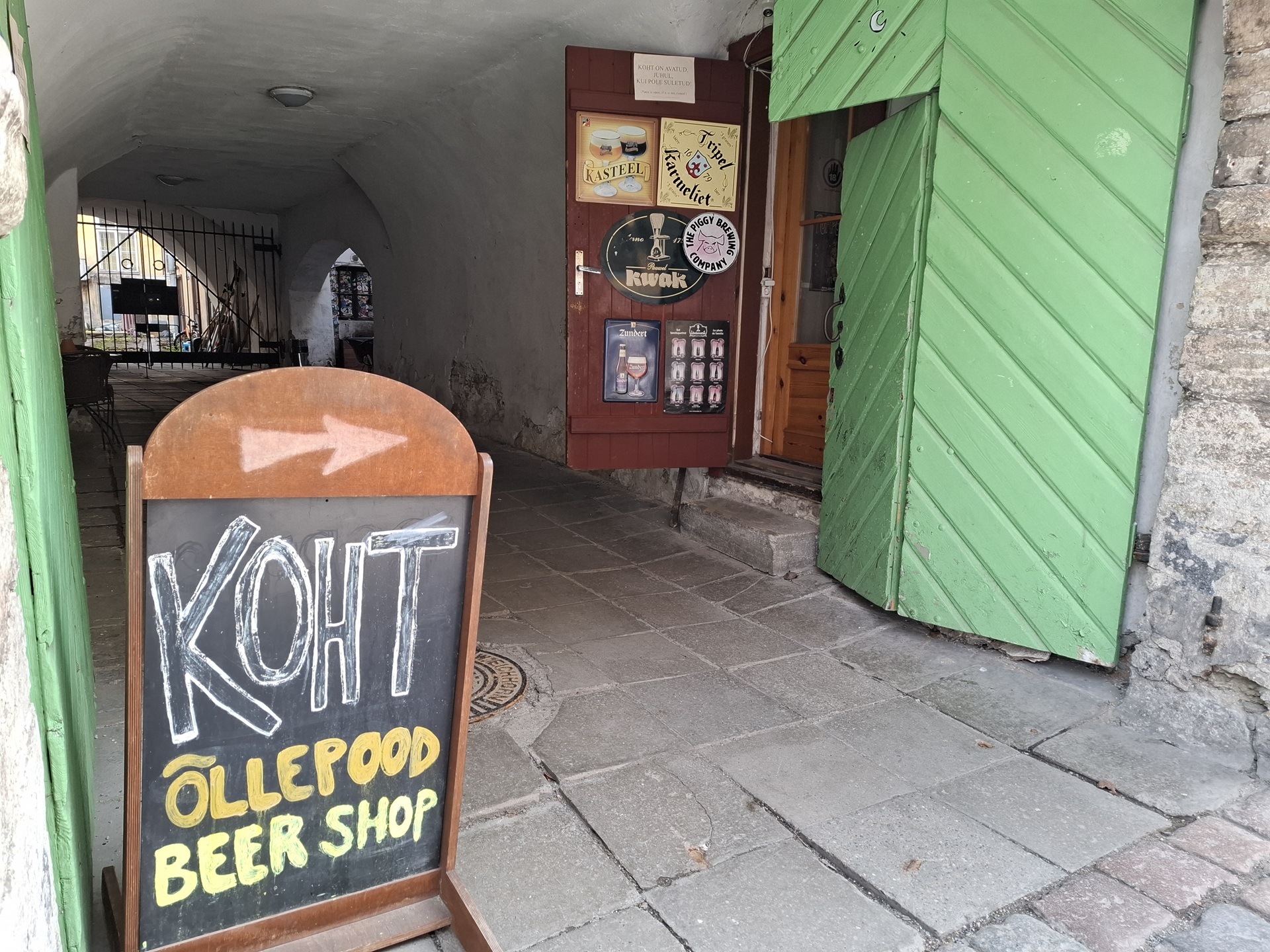
Then there are the craft and beer-specialist spots, where Tallinn becomes much more interesting. Places like Koht and Uba ja Humal focus on rotating selections, niche imports, and Estonian craft breweries, often with staff who can actually guide you through styles rather than just point you to a shelf. You’ll also commonly see beers from Põhjala Brewery, one of the most influential craft producers in the region, especially in more curated taprooms and specialty shops.
The real distinction is intent. Supermarkets are about convenience, bottle shops are about breadth, and craft-focused places are about exploration. In Tallinn, those categories are physically close to each other, but the experience changes quickly depending on where you step in.
Why Old Town Convenience is Easy, but Not Always the Smartest Choice
Tallinn Old Town is where many visitors start, and for good reason. It is central, walkable, and easy to combine with a day of sightseeing. If you are near Viru Gate, Freedom Square, or the lower edge of Toompea, you will find alcohol retail within reach. But convenience is not the same as value.
Old Town shopping is shaped by foot traffic more than neighborhood need. That means some shops are tuned for quick purchases from visitors, not for residents who compare shelves and know what they want. The result is often a narrower range, more obvious products, and prices that can feel less appealing than the shops a short walk away.
This does not mean Old Town is useless. If you are staying there, it can still be the right place for a last-minute bottle or a simple beer run. But if you have time, it is usually smarter to step just beyond the heaviest tourist corridor. Even a 10 to 15 minute walk can change the atmosphere enough to make the stop feel more practical and less inflated.
That shift is easy to notice. One street can feel packed with sightseeing traffic, while the next begins to look like normal city retail again. The language mix changes, the shelves feel more ordinary, and the shop no longer seems built around impulse buying alone. For a visitor who wants to shop like a local, that small move makes a real difference.
What Tallinn Shoppers Usually Mean by Value, Selection and Convenience
In Tallinn, value is not just about the lowest price. It is also about whether the store is on your route, how much selection it offers, and whether you are looking for a basic six-pack or something more specific. A shop that is technically close but poorly stocked is not always the better choice.
Selection matters more for craft beer travelers than for someone buying a familiar lager or a bottle of spirits. If you already know what you want, convenience may win. If you want to discover something local, the store has to do more than simply exist near your hotel. It has to have a believable range.
That is why neighborhoods matter so much. In Kesklinn, around Rotermann Quarter, Port area or near Balti Jaama Turg, you can often make a quick stop that still feels reasonable. In a more residential or beer-focused district, the same errand may take on a different character entirely. Tallinn is compact, but its retail logic is still strongly neighborhood-based.
Locals usually fold alcohol shopping into a broader errand. They buy beer with groceries, on the way home from work, or while moving between dinner and a tram stop. Once you see that pattern, the city starts to make sense. The best shop is often the one that fits the route, not the one with the most dramatic storefront.
The Neighborhoods Where Tallinn’s Alcohol Shopping Feels Most Useful
If you want to shop well in Tallinn, start with the neighborhood rather than the shop name. The district tells you a lot about the likely customer, the pricing logic, and how much selection you can reasonably expect. A store in a residential or mixed-use area will often feel very different from one on a heavy tourist street.
For beer shops in Tallinn, the most useful areas are usually the ones where daily city life and visitor movement overlap without collapsing into pure tourist commerce. Telliskivi, Kalamaja, Rotermann Quarter, and Noblessner each give you a different version of that. Old Town is still part of the picture, but it is only one part.
The other thing to keep in mind is access. Tallinn’s tram and rail connections make some shopping zones much easier than they look on a map. A place near Balti Jaam can be efficient in a way that a central but congested block cannot. The city is walkable, but not every walk is equally useful.
Telliskivi and Balti Jaama Turg for the Most Useful Mix of Local Browsing and Transit Access
Telliskivi and Balti Jaama Turg are among the most practical areas in Tallinn for alcohol shopping if you want local character without sacrificing efficiency. The district blends creative-city energy, market activity, and easy access from central Tallinn, making it a convenient stop before dinner, drinks, or while moving between neighborhoods.
Balti Jaama Turg works especially well because it isn’t a typical shopping center. It feels integrated into everyday city life, where people pass through for food, errands, coffee, and transit. As a result, the alcohol retail there feels grounded in real use rather than tourist-focused display, which makes it more practical than many expect.
The area also fits easily into broader plans. You can shop, eat, and continue your evening without a detour, whether that means opening a bottle later, having a meal, or visiting nearby beer spots. Everything is close, walking is simple, and the flow between activities feels natural.
Atmospherically, the district leans more toward brick, steel, and market movement than Old Town’s cobblestones and postcard feel. It feels lived-in, with a steady mix of commuters, market-goers, and people heading to bars or dinner, exactly the kind of everyday rhythm that makes it such a strong place for shopping.
Kalamaja and the Route Toward Põhjala for Craft-minded Shoppers
Kalamaja is the kind of district that gives context to a beer purchase. It is residential, calm in the daytime, and more social as the evening develops. For readers who care about beer culture, that makes a difference. Shopping here feels less like ticking off an errand and more like moving through a neighborhood where people actually live and drink.
The route toward Põhjala Tap Room matters as much as the district itself. When beer shopping is tied to a brewery, a taproom, or a place where locals might actually drink afterward, the shelves tend to make more sense. You are not just buying a product. You are seeing how that product fits into a wider drinking culture.
This is also a useful area if you want to walk a bit for better selection. The streets are quieter, the pace is slower, and the shopping experience is less compressed than in the center. That makes it a good match for anyone who enjoys looking through labels, asking questions, or choosing a small mixed basket rather than grabbing the first thing in reach.
There is a softer visual rhythm here too. Wooden houses, side streets, and a more local sense of scale give Kalamaja a different mood from the city core. Beer shopping in that setting feels part of the neighborhood rather than an isolated tourist task. If you want the retail stop to carry some atmosphere, this is one of the better parts of Tallinn to do it.
Rotermann and Kesklinn for Central Convenience Without Full Old Town Pricing
Rotermann Quarter and the broader City center area are often the smartest central options when you want convenience without leaning too hard into Old Town pricing. They are easy to reach, practical for hotel-based stays, and generally less shaped by souvenir traffic than the historic core. If you are moving between dinner, transport, and a central hotel, this is a sensible zone to check first.
The atmosphere here is more businesslike and modern. Glass, stone, cleaner lines, and a somewhat quieter daytime rhythm make the area feel efficient rather than theatrical. That matters when you are buying alcohol because the whole process feels more like an ordinary city errand and less like a stop built around visitors with luggage.
This part of Tallinn is especially useful if you are comparing options. You can often look at one store, walk a few minutes, and find a better one without changing your whole evening plan. That is one of the quiet strengths of central Tallinn. Small distances can still change the shopping experience enough to justify the walk.
Where Estonian Beer Culture Shows Up on the Shelves
If your goal is to understand Tallinn through its beer shops, the shelves themselves are part of the story. Estonian beer culture shows up in the balance between everyday lagers, local craft labels, and a modest but useful imported selection. A good store tells you a lot just by what it carries and how it arranges it.
The names you see most often are worth learning. Saku and A. Le Coq are the staples most visitors encounter first, and they set the baseline for what everyday beer looks like in Estonia. Then there are craft-forward names like Põhjala and Tanker, which point you toward a more current, brewery-aware side of the market.
You do not need to be a beer expert to read the shelves well. You just need to know what signals a store is routine, what signals it is craft-minded, and what suggests a tourist-heavy selection that looks more convenient than useful. Once you can do that, you can shop with much more confidence.
The Everyday Brands that Define a Lot of Tallinn Beer Shopping
For most visitors, the most recognizable part of Tallinn’s beer shelves is the everyday local lager section. Saku and A. Le Coq are the names that come up again and again, and they are worth paying attention to because they tell you what many local shoppers know by instinct. If a store carries these well, it is usually functioning as a proper everyday retailer.
Brands such as A. Le Coq Premium and Saku Originaal are especially useful as reference points. They show up in supermarkets and mixed grocery settings across the city. If you want a quick sense of what beer shopping looks like in Tallinn without overthinking it, these labels are a good place to start.
The experience is usually practical rather than romantic. Bright refrigerated sections, clear pricing, and compact displays dominate the shelf. In that sense, Tallinn is not unusual. But the local brand mix is distinctive enough that even a simple purchase can tell you something about the city’s drinking habits.
Supermarket chains such as Prisma, Rimi, Selver, Coop, Maxima and sometimes Kaubamaja are where these everyday options make the most sense. If you want a basic local beer, a supermarket is usually the quickest, most predictable answer. That is especially true if you are staying in a residential part of the city or need a simple stop near transit.
If you want a clearer overview of the broader beer landscape, Estonian beer guide is the natural companion reading. It helps the shelf names become a little more meaningful.
Craft Labels and Brewery Names That Tell You a Shop Cares About Selection
Once you start seeing Põhjala consistently, you are in a different kind of shop. That name is one of the clearest signs that a retailer understands modern Estonian craft beer. It does not guarantee perfection, but it usually means the store has moved beyond a purely basic stock list.
Tanker is also useful marker. If a store carries these with any depth, it is paying attention to more than the most obvious supermarket staples. You may also see a wider spread of cans, bottles, seasonal releases, and styles like IPA, stout, or sour. That is where the shopping becomes more interesting.
Specialist places such as Uba ja Humal, Pudel and brewery-adjacent stops near Põhjala Tap Room tend to reward this kind of attention. The shelves are more curated, the layout encourages browsing, and the pace is usually calmer. The point is not just to sell alcohol. It is to present a range that feels intentional.
That difference matters because craft beer shopping is often about discovery. A good store does not need to overwhelm you. It just needs to show enough range that you can compare styles and leave with something that feels local and specific. In Tallinn, that experience is strongest when the retailer is close to the beer scene itself, not just a generic convenience stop.
If you want to tie the shelf experience to where the beer is actually poured, it helps to connect it with Tallinn craft beer bars and Tallinn taprooms. The relationship between retail and taproom culture is quite visible here.
What to Look for If You Want a Shelf that Feels More Local Than Touristy
A shelf that feels local usually has balance. It mixes Estonian brands, a few Baltic or regional options, and only a modest amount of obvious tourist-familiar stock. The best Tallinn beer selection rarely looks flashy from the street. It looks practical, legible, and quietly competent once you are inside.
Tourist-oriented stores often do the opposite. They lean too heavily on easy-to-recognize products, present a narrow range, and make the store feel like a quick stop rather than a place where people browse with intention. That does not always mean the prices are outrageous, but it does mean the shop may not be giving you much beyond convenience.
The strongest shelves are often in areas like Telliskivi, Kalamaja, and parts of Rotermann Quarter. These are not the most dramatic shopping environments, but they are more likely to reflect local habits. You see enough standard beer to understand the everyday market and enough craft bottles to make the visit worthwhile.
Shopping Timing, Opening Hours and the Rhythm of a Tallinn
Timing matters more in Tallinn than many visitors expect. The city is not huge, but the shopping rhythm changes through the day, and alcohol retail is affected by that rhythm. A midday stop feels very different from a late-evening errand, especially in areas that also serve nightlife or commuter traffic.
If you are wondering about alcohol shop opening hours or what time liquor shops close in Tallinn, the safest approach is not to assume the whole city behaves the same way. Central locations, supermarkets, and more convenience-oriented shops often have different practical patterns. It is better to shop earlier if you have a specific plan. Beer shops are normally open 10am til 10pm.
That is especially true if you care about selection. The later the hour, the more you are shopping for convenience, not browsing pleasure. If you want to compare labels or pick out a few interesting bottles, earlier is usually easier.
Why Earlier Shopping Often Feels Easier Than Last-Minute Shopping
Midday and late afternoon are often the most comfortable times to shop. The aisles are calmer, the shelves are easier to read, and the store feels like part of normal city life rather than a pressured stop before closing. In central areas such as City center and Rotermann Quarter, that can make a real difference.
If you need a specific beer or a particular spirit, earlier shopping reduces the risk of thin selection or a crowded counter. You also have more time to compare alternatives, which matters if you are looking for something beyond a standard bottle. Late shopping is fine for topping up, but it is not the best time for discovery.
It is also easier to combine the errand with the rest of the day when you shop earlier. You can buy before dinner, before a brewery visit, or before settling into your hotel. That keeps the purchase part of the day rather than the thing that interrupts it.
The mood is simply better too. Earlier shopping feels calmer and more functional. There is less queue stress, less crowding, and more room to think. In a city where the best choices often depend on a short walk or a small detour, that extra breathing room helps.
How Weekday, Weekend and Summer Patterns Change the Shopping
Weekdays in Tallinn usually feel more local and routine. Weekends bring a mix of residents and visitors, and summer can compress central retail even further. A shop that feels easy in February may feel noticeably busier in July, especially in areas like Tallinn Old Town, Port of Tallinn, and Noblessner.
Seasonal pressure is real here. The historic center absorbs a lot of it, but so do waterfront areas and the most obvious social districts. That does not mean you should avoid them. It just means you should plan a little more time, especially if you are trying to shop before dinner or before a specific train or ferry connection.
In winter, the shopping experience is usually more compact and efficient. In summer, there is more light, more pedestrian movement, and more competition for calm shelf space. The same street can feel entirely different depending on the month and time of day. Tallinn changes in a way that is easy to underestimate from a distance.
If you are visiting during a busy period, it can help to pair your shopping with seasonal events in Tallinn so you can plan the evening more intentionally. A little timing awareness saves time and keeps the errand from feeling rushed.
How to Avoid Tourist-Trap Alcohol Shops Without Overcomplicating the Search
You do not need to become an alcohol retail expert to avoid weak-value shops in Tallinn. A few simple checks are enough. The key is to stay slightly skeptical in the most obvious tourist zones and to compare one nearby option before buying.
Tourist areas can still be useful. The problem is that location can do too much of the work. A shop near the busiest part of Tallinn Old Town may be convenient, but convenience should not automatically justify the price or the shelf mix. Look at the stock first.
The best shops usually make themselves obvious through selection and balance, not through marketing language. If the shelves look thin, the product range feels narrow, or the store seems more tuned to quick impulse purchases than useful browsing, there is probably a better option a few blocks away.
The Warning Signs That a Shop is More About Location Than Selection
A very central shop is not automatically a bad shop. But if it leans too hard on location, you should pay closer attention. Narrow shelf variety, obvious souvenir-style packaging, and vague pricing logic are all worth noting. In parts of Tallinn Old Town and near the Port of Tallinn, those signs appear often enough to matter.
The atmosphere also gives clues. Tourist-heavy shops often feel busier, louder, and more transactional. People move quickly, browse less, and buy on impulse. That does not mean the products are bad, but it usually means the shop is not trying very hard to offer a richer beer or liquor selection.
If you only need a quick convenience purchase, that may be fine. If you are shopping for something specific, it is worth stepping back and checking alternatives. A short comparison walk can save money and improve the range available to you. In Tallinn, that kind of small detour often pays off.
Why Walking a Little Farther Often Gets You a Better Shop
Walking a few extra blocks is often the simplest fix. Move away from the most photographed street, and the retail pattern changes quickly. The clientele becomes more mixed, the selection usually feels less stripped down, and the shop has a better chance of serving real neighborhood use instead of pure visitor turnover.
This is especially true in City center, Rotermann Quarter, Telliskivi, and Kalamaja. The store you find just beyond the obvious tourist zone is often the one that feels more competent and less performative. You do not need a grand search. You just need a short, practical detour.
Locals do this automatically. They take routes that visitors often overlook because they are not scenic enough or famous enough. But for beer and liquor shopping, the useful route is often the less obvious one. The city becomes more ordinary, and that is usually a good thing when you are buying alcohol.
How to Compare Prices and Selection Without Needing to be an Expert
You do not need specialist knowledge to spot a better store. Start with the range. Then look at the balance between local, Baltic, and imported products. If the shelves are too narrow or too novelty-driven, keep moving. If the store offers a believable mix, it is probably worth your time.
For standard beer, price and proximity matter most. For craft beer, selection should come first. The same goes for spirits if you want a specific bottle or a broader range than the first central shop offers. In practice, that means using a different filter depending on what you actually want to buy.
Good stores also make browsing easy. The shelves are legible, the categories are clear, and you can see enough of the range to decide without feeling rushed. A store that feels orderly and calm is usually a better bet than one that looks crowded or confusing. Competence is visible in retail.
Practical Route Logic for Buying Beer and Liquor in Tallinn
Tallinn is compact enough that route thinking matters. If you are staying near the center, it is often smarter to fold alcohol shopping into a walk, a meal, or a transit move than to treat it as a separate mission. The city rewards small, sensible detours.
That is especially true if you are near Freedom Square, or somewhere between Tallinn Old Town and Rotermann Quarter. You do not need to cross the whole city to shop well. You just need to know which direction is likely to give you a better store.
The useful route is usually the one that matches your day. If you are headed to a brewery, use a brewery-adjacent district. If you are arriving by ferry, choose a store near the port or along your hotel route. If you are already in Telliskivi for dinner, buy there instead of trying to reinvent the evening.
A Central Tallinn Route for Visitors Staying In or Near Old Town
If you are staying in or near Old Town, start with convenience but do not stop at the first obvious option. The center is compact, yet the difference between one block and the next can be surprisingly large. A short walk toward Rotermann Quarter or just beyond the most crowded lanes can improve both selection and atmosphere.
The simplest strategy is to shop before your evening plan begins. That way you are not rushed, and you can compare one alternative if the first store feels too narrow or too tourist-oriented. In central Tallinn, a 10 minute walk is often a better investment than buying immediately at the nearest visible counter.
If your night is heading back toward the historic center, it may help to check Tallinn Old Town nightlife so you can see how the route fits the evening rather than interrupting it.
A Craft-Beer Route Through Telliskivi, Kalamaja and Brewery-Adjacent Stops
For beer travelers, the route through Telliskivi, Kalamaja, and the area around Põhjala Tap Room is one of the most rewarding ways to experience Tallinn’s craft beer scene. Instead of jumping between distant city-center bars, this walkable district connects bottle shops, breweries, and casual dining spots in a compact area where everything feels naturally linked.
Start in Telliskivi Creative City at Purtse bar or Põhja Konn where you can browse and drink craft beers side by side, then continue to nearby F-hoone for an easy food stop in the middle of the district. From there, it’s a short walk into Kalamaja, where Uba ja Humal keeps the focus on discovery with a strong selection of local and international beers in a relaxed setting.
The route naturally ends at Põhjala Brewery and its taproom at Põhjala Tap Room, the most complete expression of Tallinn’s modern beer culture, with fresh brewery pours and food in an industrial space. If you want to extend the loop, Fotografiska Tallinn adds a rooftop stop with views over the same creative district.
Overall, the strength of this area is its density: you can browse, drink, eat, and end at a brewery without needing transport. It’s a slow, connected route that shows how Tallinn’s beer culture works best when experienced on foot.
Port, Waterfront and Transit-Side Shopping When You Want Efficiency
If you are arriving, departing, or simply trying to save time, transit-side shopping makes sense. The Port of Tallinn, Noblessner waterfront and parts of Rotermann Quarter are the places to think about first. These are movement zones as much as destinations.
The advantage is obvious. You can pick up what you need without making the whole thing into an outing. That matters if you are on a short stay or if you already know exactly what you want. The downside is that these areas are more about logistics than discovery, so they are not always the best places to browse deeply.
Still, they serve a real purpose. If you want a quick bottle before heading to your accommodation, or if you need to stock up around a ferry or hotel change, this is the most efficient approach. The key is to keep your expectations aligned with the route.
What to Buy if You Want the Tallinn Beer Shopping Experience to Feel Meaningful
A good Tallinn beer purchase does not have to be complicated. In fact, the most satisfying basket is often a small one that includes one everyday local beer, one craft pick, and one bottle you can use as a comparison. That gives you a better sense of the city than buying a stack of the same label.
The goal is not to chase the most obscure bottle. It is to leave with something that feels representative of Tallinn. That usually means a mix of local staple and modern craft, with perhaps one imported or Baltic bottle to show how the shelves are balanced. A thoughtful small purchase is often more memorable than a big, forgettable one.
This is also where the city’s beer culture becomes a useful travel memory. When you buy well, the shop becomes part of the trip rather than just an errand. The shelves help you understand what the city drinks, and the bottle in your bag carries that context with it.
A Smart First Basket: One Local Staple, One Craft Pick, One Comparison Bottle
If you want a simple formula, use this one. Choose one local staple like Saku Originaal or LeCoq Premium. Add one craft beer from Põhjala orTanker. Then pick one imported or comparison bottle so you can see how Tallinn’s shelves are balancing local and outside options.
This approach works in nearly any shop with a decent range, especially in places like Prisma, Rimi, Araxes or City Alko. It gives you a snapshot of everyday drinking and beer curiosity in one small purchase. You do not need to spend much to get a meaningful sense of the market.
For a hotel stay, this is often enough. You do not need a huge haul. A few cans or bottles will do. The point is to choose carefully enough that the selection feels like part of the trip, not just another item on the receipt.
The basket also makes sense as a gift if you want to bring something local home. A clearly Estonian label is easier to explain, and the mix of styles gives the purchase a little narrative. It says something about place without becoming overworked.
When Spirits Make Sense and When Beer Shops are the Better Choice
If you are shopping for spirits, a liquor-focused store can make more sense than a beer shop. The range is often broader, the bottle displays are clearer, and the store is likely to carry the kind of practical choices you want for cocktails, mixing, or a simple bottle for the room. Super Alko or even Kaubamaja can be useful depending on where you are.
Beer shops are better when the goal is local brewing culture, label discovery, or a more curated browsing experience. You are not just buying alcohol. You are looking at how Tallinn presents its beer identity. That is a different kind of stop, and it usually pays to choose the right format from the start.
Supermarkets sit in the middle. They are often enough if you want something straightforward and do not need specialist advice. For standard needs, they are efficient and predictable. For more exploratory shopping, they are not always the strongest option.
The Kind of Shop That Feels Worth Remembering After the Trip
The most memorable beer or liquor shop in Tallinn is rarely the most expensive or the most famous. It is usually the one that sits naturally in the neighborhood, offers a decent range, and gives you a clearer sense of how the city actually shops. That is why areas like Telliskivi, Kalamaja, Noblessner, Port area and Rotermann Quarter stand out.
A good shop can sit between a meal, a walk, and a brewery visit and still feel like part of the trip. That is often how memories form here. Not from one dramatic purchase, but from the way the shop connects to the neighborhood around it.
If you have time, choose a place where you can browse without rushing. Pay attention to the labels, the shelf balance, and the local names. A small, well-chosen purchase usually says more about Tallinn than a large random one.
That is the real value of understanding Tallinn beer shops and liquor shops properly. Once you know how the city is organized, shopping stops feeling like guesswork. It becomes part of how you read the city. And if you want to keep going, pairing this guide with Telliskivi bars and restaurants, Noblessner beer and dining spots, or the broader Tallinn nightlife guide will take you further into the local rhythm.